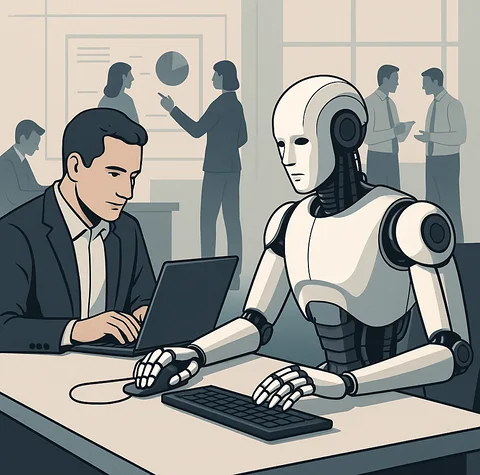
Jobs ai will not take: the human touch that machines can’t replicate
By Shake HasanAs artificial intelligence (AI) continues to revolutionize industries worldwide, a growing concern among workers is which jobs will remain in the hands of humans. While AI excels in data analysis, automation, and even creative tasks, certain roles still require a d…
লিখেছেন shake hasan
৩ মিনিটে পড়া যাবে
By Shake Hasan
As artificial intelligence (AI) continues to revolutionize industries worldwide, a growing concern among workers is which jobs will remain in the hands of humans. While AI excels in data analysis, automation, and even creative tasks, certain roles still require a distinctly human touch. Here’s a closer look at the kinds of jobs AI is unlikely to take over anytime soon.
Healthcare Professionals
Despite AI’s growing presence in medical diagnostics and robotic surgery, healthcare still fundamentally relies on human practitioners. Doctors, nurses, and therapists provide compassionate care, emotional support, and intricate hands-on procedures that AI cannot replicate. The ability to understand complex human emotions and build trust with patients remains a distinctly human capability.
Educators and Trainers
Teaching is not just about transferring knowledge; it’s about inspiring, mentoring, and adapting to the individual needs of students. While AI can assist with grading and personalized learning plans, the empathetic and motivational roles of educators are irreplaceable. Teachers influence students through personal experiences, values, and interpersonal relationships, aspects that AI lacks.
Creative Professionals
Jobs in the creative sector, such as artists, writers, and musicians, demand a level of originality and emotional depth that AI cannot achieve. While AI-generated art and music exist, they often lack the nuanced understanding of human experiences and cultural contexts. The subjective nature of creativity ensures that human input will always be valued in these fields.
Mental Health Professionals
Psychologists, counselors, and social workers provide critical support that relies heavily on empathy, intuition, and deep human connection. Although AI can offer initial screenings and support chatbots, the therapeutic alliance formed between a client and a mental health professional is irreplaceable. The nuanced understanding of human behavior and emotions is something only humans can fully grasp.
Skilled Trades and Crafts
Trades such as plumbing, electrical work, and carpentry require hands-on skills, problem-solving abilities, and adaptability to diverse environments that AI cannot replicate. The creativity involved in these trades, from designing custom solutions to managing unpredictable situations, ensures that skilled tradespeople remain essential.
Leadership and Management
Effective leaders and managers not only make strategic decisions but also motivate, inspire, and guide their teams through complex interpersonal dynamics. The ability to negotiate, build consensus, and lead with empathy are qualities that AI lacks. Human intuition and ethical judgment play critical roles in leadership, making these positions resistant to automation.
Humanitarian and Social Services
Roles in humanitarian aid and social services require deep empathy, cultural sensitivity, and adaptability to diverse and challenging situations. AI can assist with logistics and data analysis, but the human ability to connect, understand, and respond to individual needs in crisis situations is irreplaceable.
Legal Professionals
While AI can aid in legal research and document analysis, the practice of law involves nuanced understanding, ethical considerations, and persuasive communication that only humans can provide. Lawyers, judges, and mediators must navigate complex human interactions and societal norms that AI cannot fully comprehend.
Customer Service
High-quality customer service involves understanding and responding to customer needs with empathy and personalized solutions. While AI can handle routine inquiries and support tasks, the ability to manage escalations, provide tailored responses, and build customer relationships relies on human interaction.
Conclusion
As AI technology advances, its role in augmenting human capabilities will continue to grow. However, jobs that require emotional intelligence, creativity, empathy, and complex human interaction remain beyond the reach of AI. These roles highlight the irreplaceable value of the human touch in our increasingly automated world.
This article is part of an ongoing series exploring the impact of AI on the workforce and society at large.
এই লেখাকে রেটিং দিন
মন্তব্য
এখনও মন্তব্য নেই