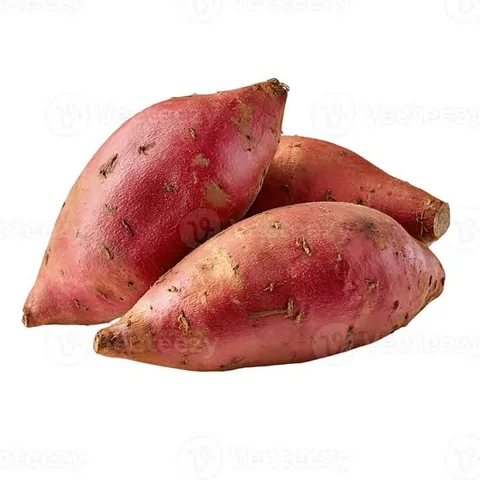
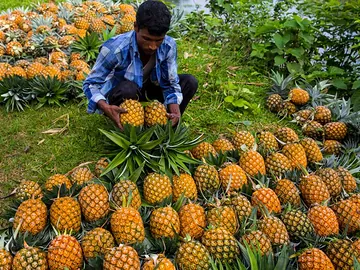
This image shows sweet potatoes (known locally in Bengali as misti alu / মিষ্টি আলু). Scientifically known as Ipomoea batatas, this is a dicotyledonous plant belonging to the morning glory family (Convolvulaceae), grown for its starchy, sweet tuberous roots.
Key Characteristics
- Appearance: Tapered, oblong tubers with smooth, reddish-purple or pinkish skin and flesh that ranges from white or pale yellow to bright orange.
- Flavor & Texture: Naturally sweet with a creamy, dense, or moist texture depending on the variety when baked or boiled.
Nutritional Benefits
- Rich in Beta-Carotene & Vitamin A: Orange-fleshed varieties are exceptionally high in beta-carotene, supporting eye health, immunity, and skin function.
- Complex Carbohydrates: Provides a steady source of energy with a lower glycemic index compared to regular white potatoes, helping maintain stable blood sugar levels.
- High in Dietary Fiber: Promotes healthy digestion and feeling full for longer periods.
- Packed with Potassium & Manganese: Essential minerals that support heart function, muscle activity, and bone health.
Common Culinary Uses
- Boiled or Steamed: Simple street-style snack served plain, sprinkled with a touch of salt, or tossed with lime juice and spices.
- Roasted or Baked: Cut into wedges or fries, coated with oil and herbs, and baked until crispy on the outside and tender inside.
- Sweets & Desserts: Used in traditional South Asian sweets like Misti Alur Pantua (sweet potato gulab jamun), halwas, or puddings.
- Mashed or Curried: Blended into savory curries, mashed as a side dish, or added to soups for natural sweetness and thickness.